ORGANIC/BIO-DYNAMIC AND DRY FARMING
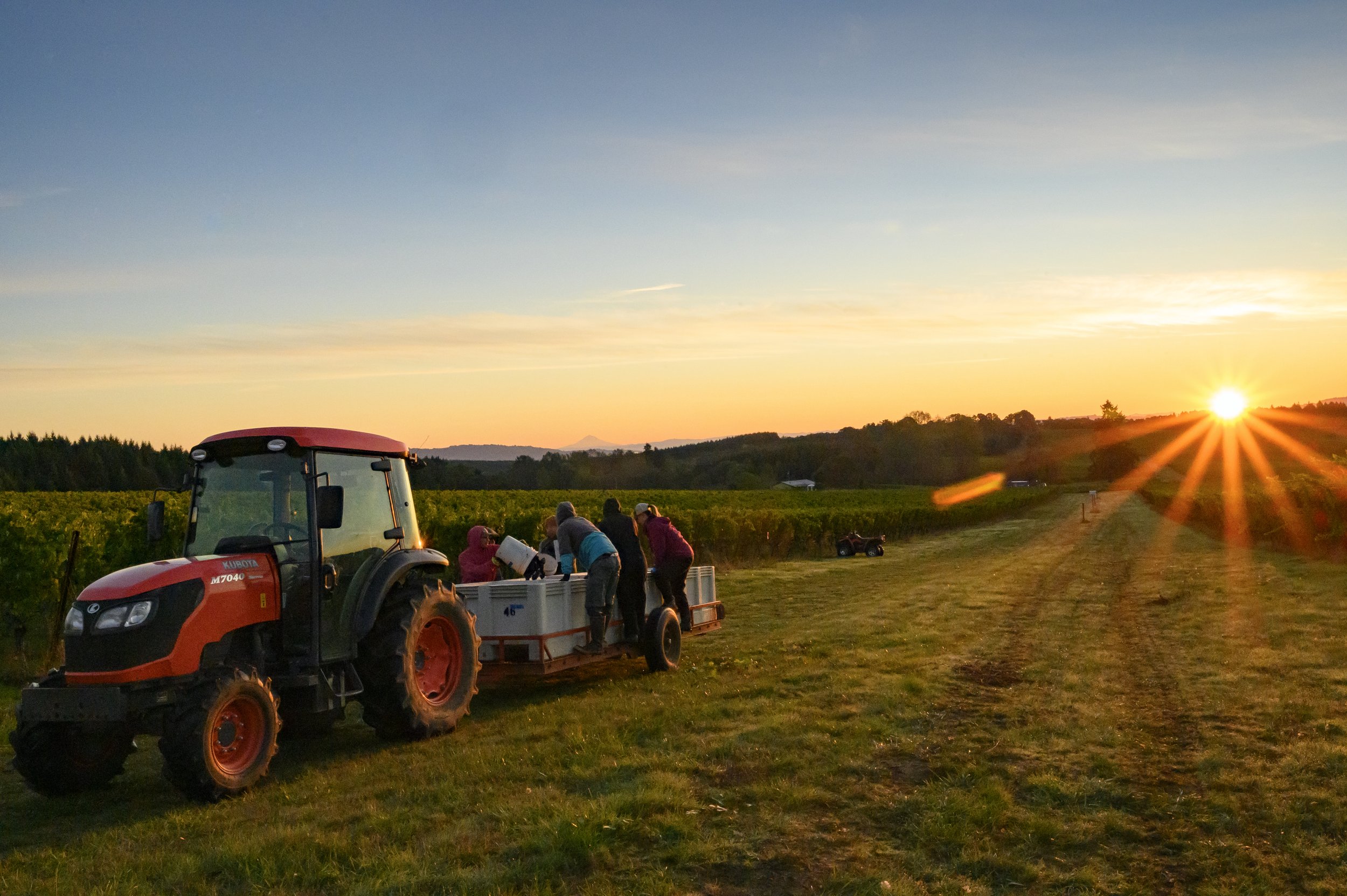
Our wines begin with a deep connection to the land. We farm all 60 acres of our estate vineyards ourselves, with our own crew, using organic and biodynamic practices and without irrigation. We dry farm because we want our vines to work: sending roots deeper through the soil, into the subsoil and parent material below, searching for water and building a stronger connection to the geology of each site. Biodynamics takes that philosophy even further. We treat the vineyard as a living ecosystem, using preparations such as compost, horn manure, and silica, while paying attention to the natural rhythms of the vineyard rather than simply reacting to problems with inputs. It’s farming that is hands on, a little unconventional, and deeply connected to place—which is exactly how we approach winemaking. We aren't trying to manufacture perfect fruit or polished wines. We want vineyards with personality and wines with energy, wild, alive, and unmistakably Oregon.

PROCESS
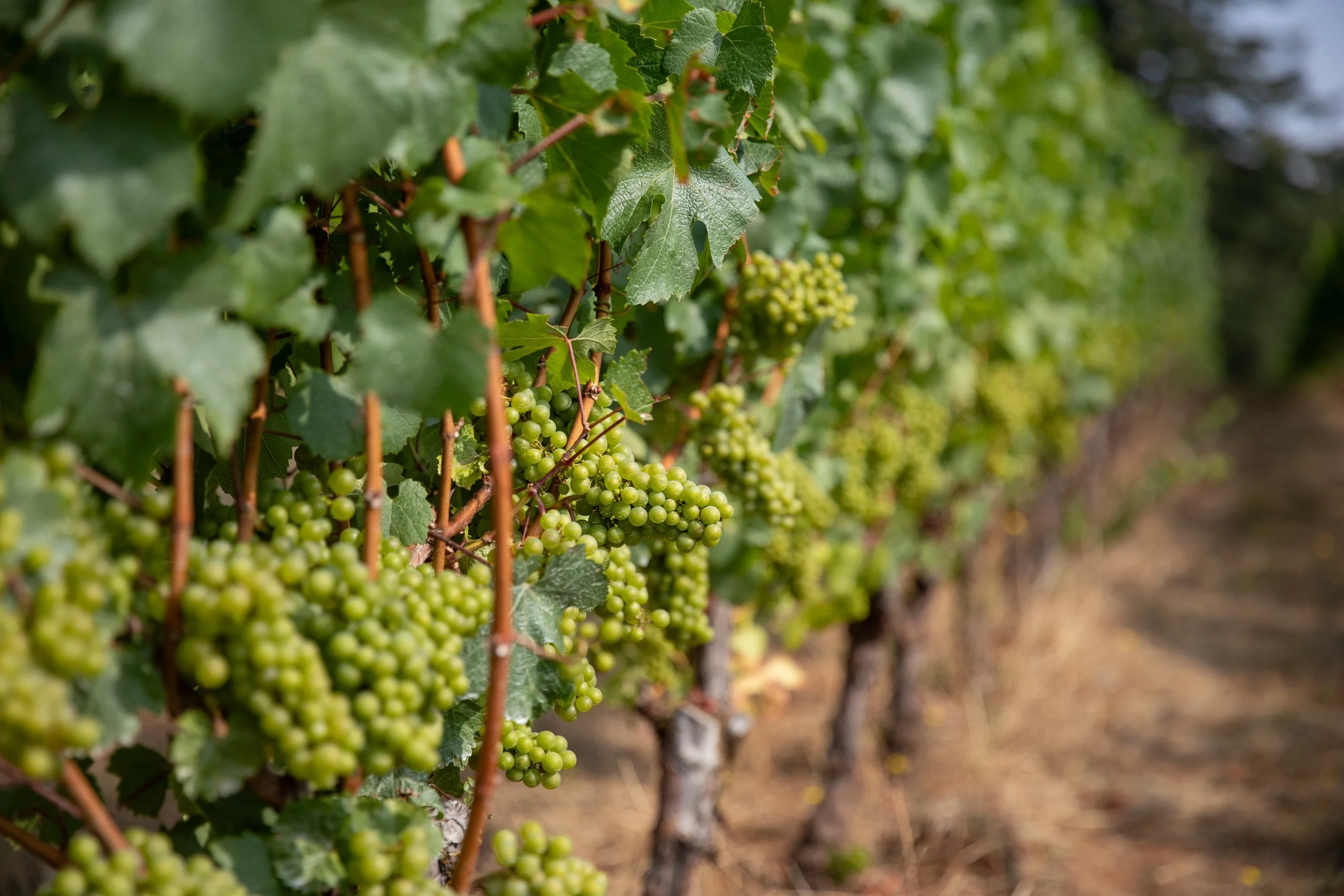
Winemaking at Purple Hands is low-intervention from the moment the fruit leaves the vine. We pick in the cold early morning hours, bringing fruit into the winery at around 45°F as the sun rises. That natural cold becomes our refrigeration. Pinot Noir is sorted and moved into open-top fermenters, where it slowly warms and soaks on its skins before native fermentation begins, without temperature exchange or manipulation. Whole cluster is used intuitively, in larger or smaller amounts depending on the vintage, ripeness, stem maturity, and character of the fruit. We don’t follow a recipe. We listen to what each vineyard and each vintage gives us.
Once fermentation is complete, the wines are gently pressed, settled, and moved to barrel, where they are raised in hand-crafted vessels made from oak sourced from our favorite European forests. Time does most of the work.
Our Chardonnay follows the same philosophy, but takes a decidedly unconventional path. We pick early at low Brix to hold onto the bright, electric acidity we love. A small amount of skin-contact juice is added back before we intentionally expose the juice to oxygen for several days a process we call “blackening the Chardonnay.” The juice can become surprisingly dark before fermentation, allowing phenolics to oxidize and precipitate early rather than later in the finished wine. The result is Chardonnay with purity, texture, freshness, and the structure to age. Fermentation begins natively, all wines complete malolactic fermentation, and we aim to finish with a naturally vibrant pH around 3.25.
At Purple Hands, we believe great winemaking is often about knowing when to get out of the way. We add nothing we don't need and take nothing away. No artificial ingredients. No polishing away the interesting edges. Just fruit, fermentation, oak, time, and instinct. The wines are meant to taste alive, wild, energetic, unfiltered, and unmistakably Oregon

CLONE
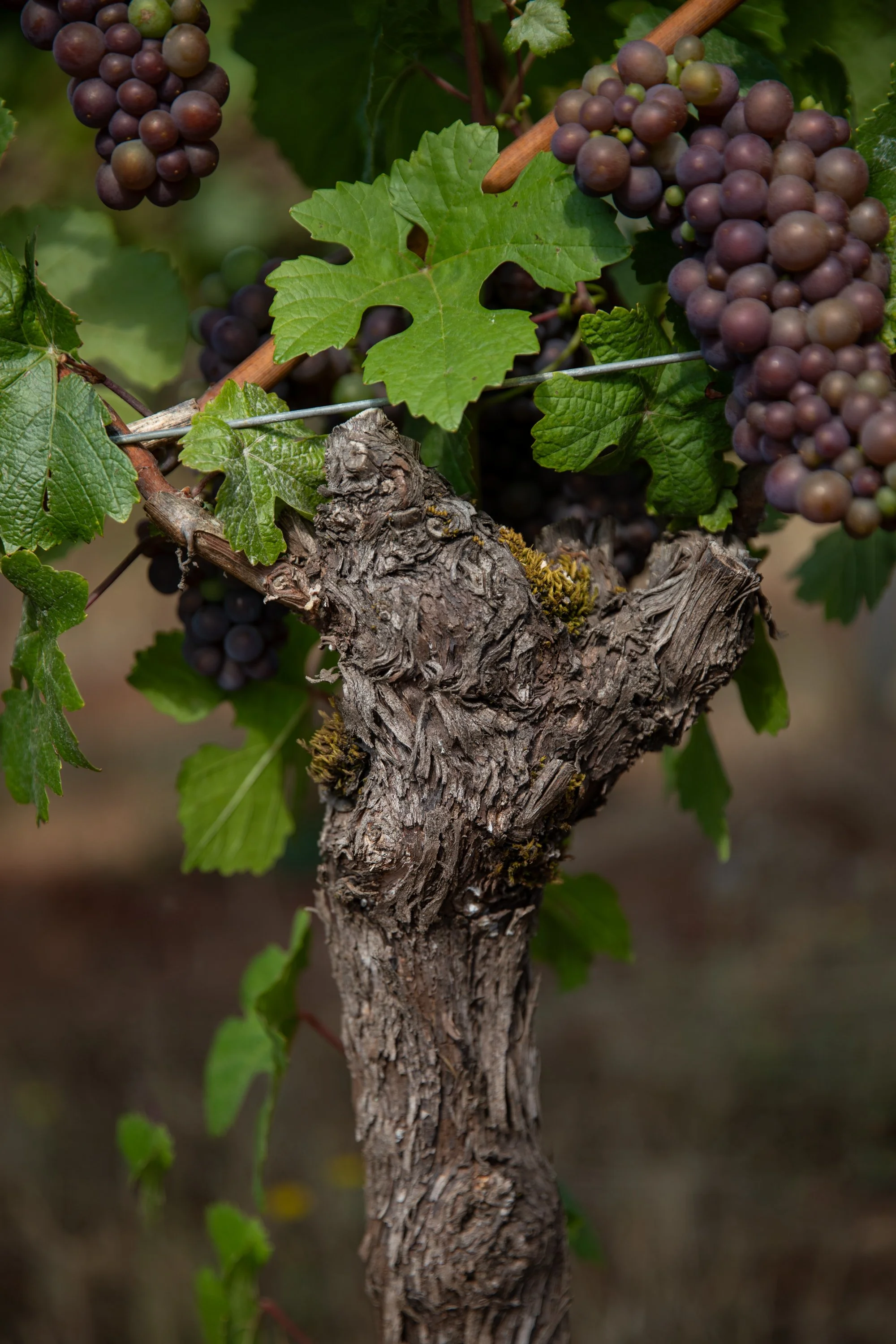
Pommard, Wädenswil, Coury, Dijon 777, Dijon 943, and Dijon 115 are the primary Pinot Noir clones we work with, chosen for their distinct personalities and their ability to transparently express Oregon’s ancient soils. Each clone brings something different to the conversation, aromatics, fruit, earth, spice, structure, texture, or length and each has enough character to stand on its own as a complete, clone-specific wine.
We think of clones as the vocabulary of a vineyard. Their DNA gives each one its own language, but the place where it grows, soil, geology, elevation, wind, exposure, and climate—gives that language an accent. Put the same clone in two different vineyards and it tells two different stories.
That relationship between DNA and dirt is one of the things that fascinates us most about Pinot Noir. We aren't trying to make every vineyard taste the same. We want the clone and the site to speak together—sometimes quietly, sometimes loudly, but always with a sense of where they came from.

PLACE
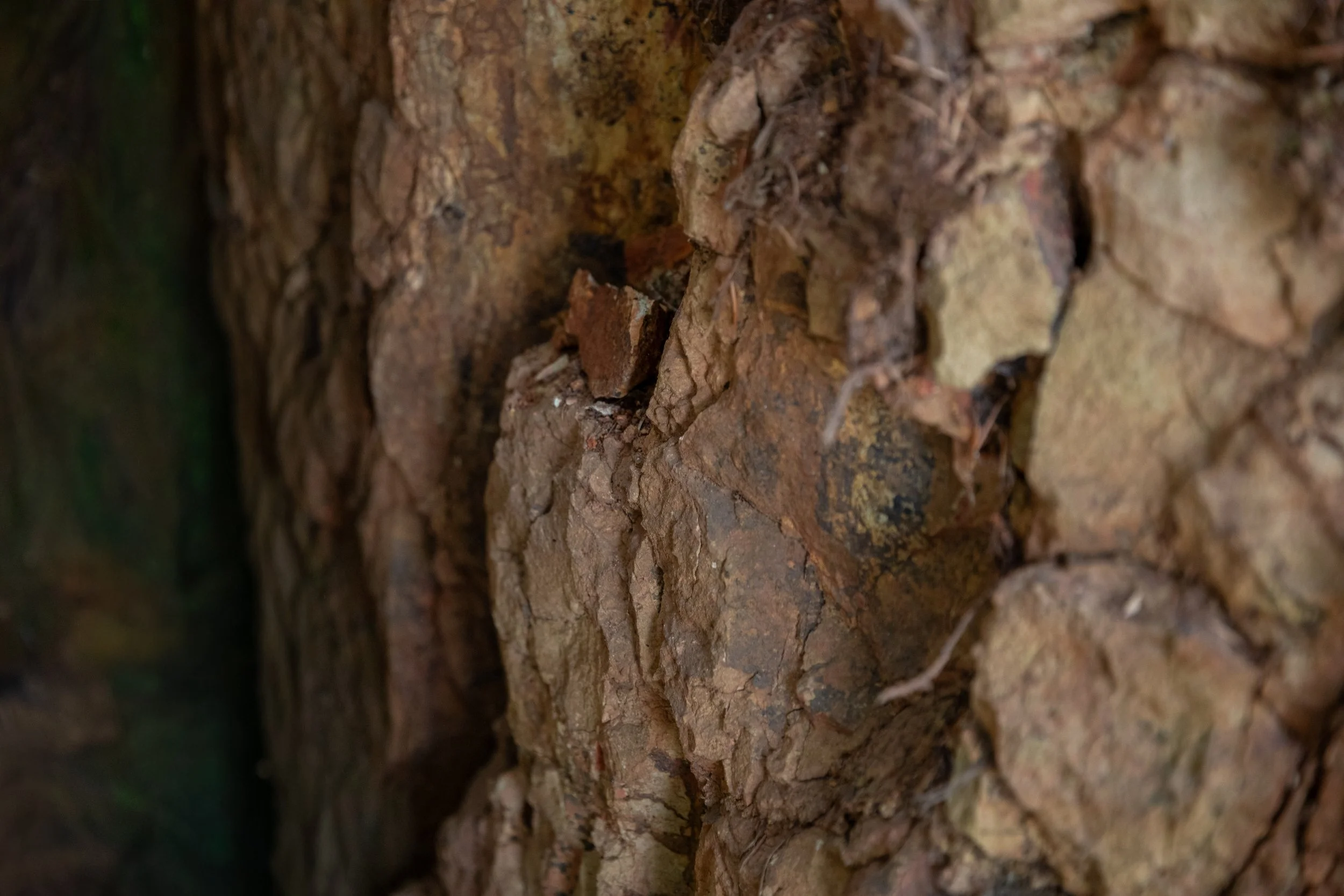
We work every vintage to let millions of years of geological history find its way into the glass. From the ancient volcanic Jory soils of the Dundee Hills to the marine sedimentary soils found throughout the Willamette Valley, geology is the foundation beneath everything we do. We see those differences expressed in the personality of the fruit, red, blue, and black fruit, along with shifts in spice, earth, texture, and savory character.
Elevation adds another layer. Lower elevation sites often give us broader, more fruit driven wines, while higher-elevation vineyards tend to show greater tension, freshness, and a mineral, energetic quality.
For us, terroir isn't an abstract idea. It's geology, elevation, climate, clone, and farming working together. Our job is to interfere as little as possible so those differences aren't erased in the cellar. We don't want every Purple Hands wine to taste the same. We want each wine to taste like somewhere.